
Ontario’s microFIT Program Expands Renewable Power Generation

Article by A. Brentley
Austin Brentley currently works with the Ontario Solar Academy, writing articles about North America's growing solar revolution with a focus on Ontario.
A. Brentley has written 85 solar articles.
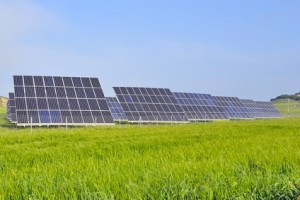 Launched last October, the Ontario Power Authority’s (OPA) microFIT Program is growing steadily, with over 16,000 applications filed since the program’s initiation. Affiliated with the feed-in-tariff (FIT) program, microFIT specifically targets small-scale solar projects under 10 kilowatts. microFIT is designed to foster the development of green energy resources among owners of homes, businesses, farms, and small organizations. The current, 80.2 cents per kilowatt-hour (kWh) rate paid to microFIT clients is calculated to help project owners recoup their installation costs and receive a reasonable rate of return for their renewable power generation over a twenty-year span.
The flood of microFIT applications signifies a burgeoning market for professional installers of photovoltaic (PV) systems. The training and certification provided by solar energy classes help solar installers and their clients maximize their returns on renewable power generation while minimizing waste and risk.
Ontario Power Authority Proposes Rate Change for Ground-Mounted Solar
So far, most of the microFIT solar power projects have been ground-mounted rather than roof-mounted, largely due to the cheaper cost of a ground-mounted installation. The OPA has recently proposed an altered rate of return of 58.8 cents/kWh for new applications that opt for a ground-mounted system.
The rationale behind the rate adjustment is to help guarantee a reasonable rate for solar power project owners while also providing renewable power generation at a reasonable cost to consumers. Ontario Power Authority CEO, Colin Andersen, stresses that “The OPA believes the new price category is fair, reasonable, [and] more accurately reflects the costs associated with ground-mounted projects.” Anderson emphasizes that the new rate “enables the program to continue to meet its original goals and provides proper value to both generators and ratepayers,” and also, crucially, that it “maintains the long-term stability of the program.” Measures that ensure the long-term viability of the microFIT program help to guarantee that opportunities for cost reduction and income generation through the installation of green technology are available to prospective solar project owners.
If the proposed reduction in prices paid for small-scale solar power generation facilities becomes policy, project owners will likely opt for cost-efficient installations that also maximize their electrical productivity. Solar installation training and certification that demonstrate competency to project owners will provide significant advantages to contractors who have invested in solar energy classes. And if, as the OPA hopes, the rate adjustment ensures the viability of the microFIT program, the investment in professional solar energy classes will likely pay off greatly over the long term.
Price Adjustment Tentative: Public Input Invited
The proposed price adjustment is tentative, contingent on the outcomes of a 30-day consultation period with microFIT applicants. Further, should the proposed new rate be accepted as policy, it will not affect microFIT solar power generation applicants who already have an executed contract or a conditional contract offer. These applicants will continue to receive the 80.2 cents/kWh rate in place at the time of their contract offer.
During the consultation period, a series of OPA-organized Webinars provide applicants or potential applicants with opportunities to discuss the proposed new price category and to ask questions about the benefits and costs of installing green technology through the microFIT program.



Leave your response!