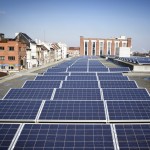
 At a recent meeting of the World Trade Organization (WTO), Ontario’s Green Energy Act, which includes the feed-in tariff (FIT) program fuelling solar panel production and installation across the province, came under attack. The FIT program, which places a priority on goods and services generated within Ontario, may also be responsible for increasing energy costs, according to a report submitted to the WTO by the World Energy Council (WEC).
The Case against Ontario and Canadian Solar Markets
Critics of Ontario`s solar industry include WTO Director General, Pascal Lamy, and John Krenicki, Vice Chairman of General Electric. They argue that tariff systems and their heavy preference for local industry participation stifle competition, raise energy prices, and ultimately slow the world`s conversion to “green” energy. Because of the domestic content requirements attached to Ontario’s FIT program, businesses without branches in the province are essentially prevented from competing, and this lack of competition drives up the costs of solar panels and their installation.
Ontario’s “protectionist” policies are not entirely new to North America - Quebec has instituted its own tariff system, and about thirty American states have passed regulations requiring their utilities to produce renewable energy, often placing emphasis on local production.
An On-going Struggle over the Canadian Solar Market
These most recent criticisms of Ontario’s FIT program come on the heels of a challenge made against the same program by Japan at the WTO late this past summer. Few expect Japan’s criticisms to go far since the laws on which the challenge is based do not seem to bind provincial or municipal governments. However, the Canadian government is in negotiations with the European Union over a large and comprehensive trade agreement, and a critical point of division has surfaced regarding provincial tariff systems. The Europeans want procurement policies favouring local industry to be scrapped, and the future of the Canadian solar industry is likely to be affected by any concessions made by Ottawa.
Ontario Solar’s Defenders
While the WTO is encouraging governments to liberalize their solar energy markets, there are others who defend tariff systems in general, and Ontario`s FIT program in particular. Among these supporters of local procurement is Ontario`s Energy Minister, Brad Duguid, who can point to a recent $7 billion deal forged with Samsung Electronics to construct four factories producing solar panels and other equipment. This deal, along with others made by international corporations looking to enter Ontario`s solar industry, could directly and indirectly result in as many as 35,000 green jobs.
In support of Ontario’s Green Energy Act, Duguid also pointed out that the FIT policy complies with WTO regulations and that only a portion of procurement needs to be local. With the potential for further job creation and solar market stimulation on the horizon, it is unlikely that Ontario’s FIT program will succumb to external pressure in the near future.