
Name: Talya Rotem
Bio: Talya Rotem holds an MA in Sociology in Education from the University of Toronto. She is also a certified nutrition practitioner, and has published many health related articles, including one written for the International Institute of Concern for Public Health.
Posts by Talya Rotem:
Belleville Solar Farm to Grow Green Careers
October 1st, 2010 The Ontario Power Authority (OPA) has approved a proposed $5 million solar farm in Belleville, Ontario that could include as many as 2,000 solar panels. The city is to invest approximately $4 million - a cost that Belleville Mayor, Neil Ellis, believes will be recouped in less than 10 years’ time. The benefits of the project extend beyond the financial and include a wave of potential new green careers and increased public interest in the requisite photovoltaic (PV) solar installation training classes necessary to support this wave.
Solar Farm Installation on Roof of New Sports Centre
In October 2009, the Belleville city council unanimously agreed to consider participating in the OPA’s feed-in-tariff (FIT) program. The council explored the feasibility of installing solar panels on the roof of a local sports centre scheduled for redevelopment. City staff prepared a report in support of a proposed solar farm, which under the terms of the FIT, would receive a guaranteed pricing rate for the renewable energy it produced. Mayor Ellis believes that the solar farm and expanded sports complex could both help generate revenue and boost demand for green careers.
The OPA approved the city’s proposal in mid-July. The council must formally accept the contract by the end of the month, and pay the $25,000 deposit on the solar installation project, which when completed, would equal a 499 kW power plant.
Investing in Green Energy and Careers
Belleville’s council pushed for the redevelopment of the old sports centre to make way for an energy-efficient Multiplex Recreation Community Centre. The new complex addresses the requirements of the community based on its cultural, recreational, and leisure needs. The addition of a rooftop solar farm further illustrates the council’s commitment to a green economy and career growth.
According to Ellis, the project with the OPA enables the council to recoup the initial cost of the farm within the first decade. Energy production thereafter provides a source of income for the municipality at a rate of 63.5 cents/kWh. Mayor Ellis believes, “We’re looking at probably $10 million in profit.” The council’s progressive plans require a substantial investment, but the promise of a greener and more sustainable local economy outweigh any initial costs. These projects are expected to produce new work opportunities for customer service personnel and skilled labour with PV solar installation certification.



Enfinity Educates Building Owners about Solar Power
September 15th, 2010 Ontario solar power company Enfinity Canada, Ltd., has expanded its business to include outreach and education initiatives. On September 9, Enfinity made available for download the Executive Brief portion of its document entitled “Key Considerations for Developing Rooftop Solar Photovoltaic Installations.” Enfinity hopes that this report will act as a blueprint, enabling building and real estate owners to fully understand the value of a well-designed solar project. The document also teaches how to avoid the possible pitfalls of contracting an inexperienced start-up.
As Ontario’s renewable energy market continues to expand, so does the number of solar companies. Building owners need to be solar power savvy prior to contracting an installation company in order to avoid wasting time and money on unsafe or low-quality projects. As Michael Wright, Partner at Ontario real estate consulting firm, A-Team Strategies, states, “Our commercial and industrial real estate marketplace has not had a lot of history with solar energy… you can see why building owners are rightfully cautious.”
Knowledge of Solar Energy Programs Imperative
Building owners looking to install solar panels should also know the basic requirements of Ontario’s feed-in tariff (FIT) program. The FIT offers producers of renewable energy various financial incentives for feeding electricity into the power grid. In exchange, FIT participants must meet domestic content and job creation criteria.
After less than a year of the program’s operation, the province is still working out the bugs. According to Enfinity’s Managing Director, Chris Young, “…with our emerging solar marketplace comes a high level of technical and policy uncertainties… so it’s important to work with a reputable and reliable partner that can navigate the complexities of Ontario’s solar opportunities.”
Number of Solar Power Start-Ups Growing
According to recent research published by A-Team Strategies, 65% of the solar energy companies currently operating are less than five years old, and 75% are managed out of tiny, one-room business operations. Currently, only twenty solar rooftop companies are registered with the Canadian Solar Industries Association (CanSIA). In the midst of these gold-rush conditions, well-educated stakeholders will strive for a standard of excellence in the solar energy market. Young believes, “Commercial building owners need to… act prudently. We see it as our responsibility to make building owners aware of the opportunities as well as potential pitfalls concerning rooftop solar projects.”
Bringing cohesion and clarity to the quickly booming solar market is one of the goals of Ontario Solar Network (OSN), founded by the Director of Canada’s only ISPQ-accredited PV training school, Ontario Solar Academy. Comments OSN President, Jacob Travis, “With nascent industries, there are always plenty of opportunities, but there are also countless obstacles” Travis adds, “Through our Network, we hope to educate consumers, support our professional members, and establish better standards that benefit the entire solar industry.”
Company Sets Stage for Solar Power Production in Mississauga, Ontario
September 11th, 2010 A leading Italian producer provider of Photovoltaic (PV) green energy products and services has set up shop in Mississauga, Ontario, with the goal of building a solar power module manufacturing facility. Silfab Ontario Inc., a subsidiary of Silfab SpA (Italy), announced that they have it had secured the required 100,000+ square foot plant, to accommodate the manufacturer’s own its mono and multi-crystalline silicon module production it addition to its Ontario-based PV original equipment manufacturing (OEM) capabilities.
Silfab Ontario to Become Leader in Canada
When Silfab SpA unveiled its plans for the production facility last June, it announced that its investment for the first phase of the project equalled $15 million (Canadian). With the facility now secured, Silfab Ontario estimates production will commence in 2011, enabling it to reach 60 MW capacity by the end of the initial year and grow to 180 MW by 2012. The division of the facility into two distinct areas - one for the manufacturer’s own modules and the other for OEM partners - enables Silfab to continue providing its products and services and partner with other green energy investors hoping to expand operations within Canada. President and CEO of Silfab SpA and Silfab Ontario, Franco Traverso, stated, “Our decision to dedicate part of our production to OEM supply contracts is meant to address the needs of all those companies that – just like us – welcome Ontario Government’s efforts to spearhead the Province’s renewable energy industry but are unlikely to commit to the investment on a local manufacturing facility.”
Silfab Offers Green Energy Partnership More Than Financial Incentives
Silfab brings to the partnership more than a leading-edge facility since it also ensures that its partners and clients meet the Ontario Power Authority’s (OPA) Feed-In-Tariff (FIT) program’s domestic content requirement for green energy producers. Silfab also offers its proven 30-year experience in solar power production and its working knowledge of the FIT program.
Several leading global companies have already approached Silfab Ontario to start negotiating OEM terms and contracts. The partnerships usually require that these companies provide their own materials to Silfab for it to build the PV modules to be distributed under the companies’ own brand names. Silfab needed the large facility site in order to sustain the labour and production rates required to grow these partnerships. At full capacity, the plant could employ 200 skilled workers within Canada.
While Silfab plans to focus its business partnerships on solar power modules, it will also include the assembly and distribution of sun-tracking systems that increase renewable energy production by 25% to 30% compared to standard PV systems. Traverso added, “For Silfab, this is an invaluable opportunity to export our consolidated photovoltaic experience and know-how in a market that has just begun to unfold.”
Provincial Energy Minister Promotes Green Economy to Northern Ontario
September 3rd, 2010 Provincial Energy Minister, Brad Duguid, recently toured a hydroelectric project in Kapuskasing, Ontario to promote the province’s push for a greener and more sustainable economy. During his visit, Duguid stated, “I really think the Green Energy Act is good for the North,” referring to the provincial government’s legislation designed to bolster investment in a cleaner, greener, and healthier Ontario. He added that the current economic stimulus in green ventures and renewable energy projects is expected to provide a strong return on investment. The Minister also took the time during his tour to promote the Northern Industrial Electricity Rate Program (NIER) - a project created to help northern industrial companies cover some of the costs they currently pay for high-priced electrical rates. Announced in the 2010 budget, this newly established economic stimulus program offers recipients incentives to ensure they can compete in the market and retain jobs in Ontario.
Economic Stimulus for a Green Economy
The province’s expanding green economy is expected to create an estimated 50,000 jobs over the next three years. This economic stimulus will help establish healthier and happier communities through job creation and the development of solar and green training opportunities in Ontario. Duguid believes, “There’s huge potential here, whether it’s wind, solar, biomass or biogas.” He further added that Ontario’s commitment to growing a green economy over the next four years would help establish the province as the first region in the world to rely wholly on clean, renewable energy, instead of on expensive, non-renewable coal.
Rate Cut Key Component of Economic Stimulus
The reduction of electricity rates may be a key component to North Ontario’s economic recovery and green growth. Local industries have long looked to cut costs in order to stay competitive with businesses in neighbouring provinces where electrical costs tend to be lower. Many investors and manufacturers in the region believe that the recent closure of a well-known metallurgic company in Timmins, Ontario was solely based on the company’s inability to pay the province’s higher electricity costs in a competitive resource-based industry. The NIER Program is set to save these facilities 25% in energy costs and provide them with 2 cent/kWh rebates over three years. The program’s proposed price reduction will go into effect in January 2011 and is applicable to 200 of the province’s largest manufacturers, should they commit to a renewable energy plan. This guarantees the protection of local jobs. It also bodes well for solar training and renewable energy courses since the region will need a qualified green workforce in order to help build the necessary infrastructure.
Green Energy Act Provides Strong Economic Stimulus
Northern Ontario industries that do not qualify for the NIER program can take advantage of the Ontario Power Authority’s (OPA) Feed-In-Tariff (FIT) program. Successful applicants receive a fixed rate for the clean energy they produce and return to the local power grid.
Wind-Solar Hybrid Pole in Conservation Park Supports Green Energy Act
September 1st, 2010 The Rouge Valley Conservation Centre (RVCC) in Toronto, Ontario is the latest participant in the Ontario Power Authority’s (OPA) micro feed-in-tariff (microFIT) program thanks to a recent renewable energy generator installation on its property. Development of the project commenced on August 25 and will be completed within the next few weeks once Toronto Hydro connects the pole’s reading meter.
The RVCC made a commitment to the goals outlined in Ontario’s Green Energy Act in its Year of Energy Conservation campaign, launched in March 2009. Its green commitment extends beyond solar and wind power generators to include a variety of energy conservation projects such as insulation upgrades and the installation of ENERGY STAR windows and doors.
Conservation Park Initiative Contributes to Ontario’s Green Economy
The RVCC’s project is a wind-solar hybrid pole that reaches 68-feet in height - the first of its kind to be erected in the Greater Toronto Area. The initiative is a natural outgrowth of the mission of the conservation park, as it focuses on environmental restoration, protection, and public education.
RVCC’s campaign goal is to reduce its greenhouse gases by 3.8 tonnes per year. These plans contribute greatly to Ontario’s efforts to becoming a green economy leader in North America – one of the main objectives of the province’s Green Energy Act. Ontario’s economy has already benefited greatly from similar community projects, resulting in ancillary job creation and skill upgrading through solar training classes and installation courses.
Serena Lawrie, Director at RVCC, believes that the locally built technology is ideal for the Rouge Valley location because it is bird- and bat-friendly and noiseless. The uniqueness of the system exemplifies the varieties of renewable energy generators readily available on the market. Ontario’s green economy continues to supply improved and more customizable technologies. As market demand for tailored energy machinery continues to grow, so will parallel demand for skilled professionals with the requisite green training from solar, wind, and engineering programs.
Financial Investment in Ontario’s Green Economy
The RVCC wind-solar system was purchased from local home energy solutions provider, EftonScience, with funding provided through grants made by the City of Toronto’s Live Green program and the Ontario Trillium Foundation. The latter two organizations are key to the success of grassroots renewable energy projects. Live Green is a new, five-year program aimed at promoting and supporting neighbourhood-based green initiatives. The Ontario Trillium Foundation helps area residents improve their quality of life by building healthy and vibrant communities.
These organizations infuse financial and human resources into projects that improve the existing conditions of Ontarians. Their growing interest in financing projects aligned with the Green Energy Act ensures the development of a strong green Ontario economy since many grassroots initiatives continue to function and grow beyond the initial year of funding. These require long-term management by local staff certified from solar and green energy training classes, and customer service programs.
US-Canada Partnership to Expand Solar Power in Ontario
August 6th, 2010 A US renewable energy developer has partnered with an Ontario-based solar power developer to build and manage rooftop projects in Ontario. Nautilus Solar Energy LLC and Bright Power Inc., formed the Nautilus Solar Canada Limited Partnership, which hopes to develop and finance 10MW of local solar power projects this year. The company is already under contract with the Ontario Power Authority (OPA) for 2.75MW AC of rooftop projects.
Nautilus Solar Brings Green Energy Success to Ontario
Nautilus Solar is eager to enter the Ontario solar market, like many other renewable energy producers and investors, to take advantage of the financial incentives offered by the OPA’s feed-in-tariff (FIT) program. The FIT offers guaranteed pricing for green energy generated from solar, wind, and other green power sources, for the duration of the 20-year contract with the OPA. Nautilus Solar CEO, James M. Rice stated, “We are pleased to move forward with the construction and financing of our first rooftop projects in Ontario, and look forward to replicating the success we have achieved in the United States.” Rice views the partnership as an opportunity to expand the company’s current projects in Canada, create green energy jobs, and work with real-estate owners eager to benefit from the financial incentives of rooftop renewable energy profits.
Bright Power is an Experienced Global Green Energy Operator
Bright Power brings to the partnership its solid management experience operating transnational renewable energy projects for Fortune 500 companies and working with leading utility corporations from around the globe. Managing Partner of Bright Power, Andrew Knapp, stated, “We view our relationship with Nautilus Solar as an excellent opportunity to leverage Nautilus’s experience in building and managing rooftop solar projects in the United States.” Moreover, Bright Power is viewed as an expert in the FIT because of its extensive operations in Ontario, experience developing local energy projects, and its relationships with commercial property owners.
Partnership Leader in Ontario Renewable Energy
Rice believes that the timing of the partnership thrusts the two companies to the forefront of the renewable energy market, stating, “Ontario’s rooftop solar market is poised to grow rapidly in the coming years under the feed-in-tariff program.” This will expand the industry as well as positively affect the growth of green energy jobs, training opportunities, and associated economic benefits to all Ontarians.
Green Jobs Still in Demand Despite Proposed microFIT Rate Cut
July 30th, 2010 The Ontario Power Authority (OPA) is inviting industry analysts to provide input on its proposed cut to rates paid for ground-mounted solar microFIT projects. This unexpected pricing shift stems from the overwhelming response from households, farms, and small businesses that sent in 16,000 microFIT applications since the program launched last year. Some analysts are concerned that the sudden rate change may impact consumer confidence in the Authority’s larger feed-in-tariff program. Others see the cut as a natural consequence of program growth and are confident in continued industry expansion and job creation.
Solar Jobs and Courses Continue to Be in Demand
The Power Authority stated that the tariff decline is necessary because of the unanticipated popularity of the program, which is mostly funded through rate payer dollars. The shift is not reflective of the entire renewable energy industry in Ontario or of possible future proposals to change its feed-in-tariff (FIT) program.
The proposed cut reflects steps taken by similar FIT programs in Spain and Germany - two countries that, due to overwhelming demand, had to scale back some of their incentives in order to keep their respective programs solvent. Khurram Malik, an Analyst at Jacobs Securities states, “The bigger program is about job creation. There may be tweaks in there … but nothing significant in our opinion.” Demand for green energy jobs, training, and solar courses continues to escalate.
MicroFIT Profit Cuts Minimal or Excessive?
Under the original program guidelines, microFIT projects must generate less than 10 kilowatts from ground-mounted or rooftop solar systems to receive $0.80 Canadian per kilowatt-hour produced. The proposal looks to cut that rate by 27% for any new ground-mounted solar contracts. Malik believes this to be a positive move for the industry as it illustrates the OPA’s commitment to the terms of contracts already awarded. While some believe that such confidence reassures the public of the OPA’s expanding interest in job-related training opportunities and solar installation courses, mounting criticism suggests that the change could backfire.
According to David Gower, Associate Director of Ontario Solar Academy, “Unilateral changes like this make proper budgeting and planning extremely difficult for the solar PV professionals who come through our courses.” He adds, “I understand the rationale behind the proposed change, but a shift like this warrants greater discussion and input from all relevant stakeholders.”
Corporate Commitment to the Feed-in-tariff
Some analysts perceive the rate change as problematic for the Authority’s larger feed-in-tariff program. The uncertainty surrounding the microFIT program resonates with corporate renewable energy producers. Dundee Capital Markets Analyst, Ian Tharp, stated, “The lack of transparency in the decision has several stakeholders casting doubt on the future of the Ontario FIT program.”
However, Malik disagrees that Ontario would make such sudden changes to its more significant feed-in-tariff program. The program has already attracted global green energy manufacturers, including South Korea’s Samsung C&T Corp and Bosch Solar Energy AG. These companies have created many new jobs across Ontario, opening up new training opportunities, and boosting demand for solar energy courses and installation certification. Other large investors are eagerly looking to participate and commit to the program’s 20-year contractual terms. It is possible that many would-be FIT applicants will wait until the OPA has finished making its decision about the microFIT before moving forward with their own solar proposals.
Legal Firms to Facilitate Aboriginal Green Energy Projects
July 13th, 2010 The renewable energy sector is providing green jobs to many Canadian lawyers busily working on contractual issues, regulations, and financing that derive from the growing industry. Many solar and wind firms already in the final stages of initial projects are looking to solidify their positions as leaders in the marketplace. John Goetz of business & litigation law firm, Fraser Milner Casgrain says, “[Our] second project will involve bank financing, aboriginal, and environmental issues.” This will be of interest to the members of the First Nations Energy Alliance (FNEA), a group working towards renewable energy development and the preservation of rural areas in order to protect the interests of future aboriginal generations and the creation of green jobs for their communities.
Aboriginal Interest in Green Energy
Lake Huron Regional Chief and Serpent River Chief, Isadore Day, believes, “The Green Energy Act and the required expansion of Ontario’s transmission network present significant opportunities for First Nations.” Similarly, the FNEA supports the development of renewable projects that would enable aboriginal communities to work collaboratively, while still retaining their independence to pursue their own energy projects. The FNEA are interested in power generation projects using wind, solar, biomass, and hydro sources. Green job creation and community-focused training opportunities could prove invaluable in a region beset by high unemployment and limited educational outlets.
Green Energy Act and Aboriginal Community
Aboriginal projects that meet the local content and investment requirements of the Green Energy Act’s feed-in-tariff (FIT) program will qualify for a “rate adder” fee. This incentive offers a higher rate for energy generated by aboriginal communities and delivered to Ontario’s power grid. The amount to be added will be determined based on a sliding scale that is dependent on the level of economic participation.
Aboriginal groups stand to receive between 0.6 cents/kWh to 1.5 cents/kWh for the power they provided. This is slightly more than the amount that is paid to other community groups participating in the Green Energy Act’s Community Energy Partnership Program (CEPP). These groups are paid between 0.4 cents/kWh to 1.0 cents/kWh for the energy they generate.
Legal Support for Rural Projects
There are over 400 green energy companies in Canada that potentially require legal assistance for their ongoing and future projects. This has created an environment conducive to entrepreneurial behaviour among law firms. Anne-Marie Sheahan, head of McCarthy Tetrault’s national environmental group says, “We want to be partners to clean tech clients whose funding doesn’t allow for a full legal spend.” Some firms are looking to smaller, less obvious projects, such as those that rural aboriginal communities hope to develop. Sheahan adds, “That means taking some risk in the sense of identifying penalties or rewards depending on the outcome, instead of simply charging an hourly rate.”
Energy and Infrastructure MPP Excited about Green Energy
July 12th, 2010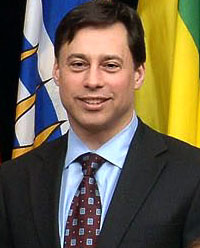 On June 30, Ontario’s Minister of Energy and Infrastructure, Brad Duguid, along with his Energy Parliamentary Assistant and Brant (ON) MPP, Dave Levac, and Norfolk County Mayor, Dennis Travale, visited the SunE Sky Ryerse solar photovoltaic park in Norfolk County, Ontario.
The provincial and mayoral representatives are excited about the project’s contributions to Ontario’s green energy industry. “These solar parks represent an important step in Ontario’s effort to become a leader in the global clean energy market,” said Minister Duguid. They will be a major source of renewable energy, attract investment to further grow the industry, and create jobs for an Ontario labour force eager to partake in solar and industry training.
Green Energy to Replace 250K Tonnes of CO2 Emissions
The park is one of two of its kind in the area that is being developed through a joint venture between partners SunEdison and SkyPower Limited. The total capital investment contribution for the project is approximately $80 to $90 million, and once completed, the combined green energy from both parks will be enough to power 33,000 homes, thus, drastically reducing CO2 emissions by 250K tonnes.
In year one, the parks will produce 19 million kilowatt-hours (kWh) of renewable energy and are expected to reach 400 million kWh by their 20th operating year. SkyPower President and CEO, Kerry Adler, stated, “The SunE Sky projects in Norfolk are great examples of how the Government of Ontario’s renewable energy policy, community foresight, and industry innovation are working together to attract large investments, create new green jobs, and enhance green skills while helping to combat climate change.”
Solar Industry Training
Many hope that the substantial infusion of investment in Ontario’s green energy industry will lead to more employment opportunities. Already, residents have begun exploring solar training classes to augment their skills and prepare themselves for the wave of potential green-collar jobs. Programs like Ontario Solar Academy offer solar PV installation courses expressly for this purpose - to help novices and veterans alike acquire the requisite training to safely work with photovoltaic technology.
The Future of Green Energy
SunEdison is North America’s largest solar energy services provider and is about to commence a third cycle of solar projects in Ontario - projects that could boost additional demand for skilled labourers and qualified solar professionals. Already, “A workforce of over 150 is actively completing the Norfolk County solar parks,” remarks Jason Gray, Vice President of SunEdison Canada. As more green energy projects are launched, it is likely that hiring freezes stemming from the current recession could eventually thaw as the province continues to transform itself into a greener, cleaner economy.
microFIT’s Popularity Proof That Ontarians Support Green Energy Act
July 8th, 2010 This June, the Ontario Power Authority posted a notice on it’s Web site alerting micro-feed-in-tariff (microFIT) program applicants that they may have to wait until September for their approvals.
While potentially frustrating to the thousands of Ontario applicants, the timing could not be better for renewable energy firms that hope to exploit this gap as they fine-tune their products and services. Magnetek Inc, for example, announced last week that it would be ready to supply the growing renewable energy market with its compact and efficient solar and wind products in the next few months. This could set the stage for further interest in the microFIT program, in addition to creating parallel growth demand for other green energy products, services, and courses. This is just one more example of industry supporting the goals of the Green Energy Act to grow a sustainable energy economy.
microFIT Financial Incentives
The Ontario Power Authority’s microFIT program is intended to attract homeowners, farmers, and small businesses interested in establishing a ‘micro’ renewable energy generation project on their own property. Program participants who produce 10 kilowatts or less of green energy become suppliers of the power grid for a contractual period of 20 years. The energy provided from solar panels pay 80.2 cents per kilowatt-hour, and wind turbine energy pays 13.5 cents per kilowatt-hour. Financial incentives like these continue to attract more attention to the program, generate further public interest in solar or wind employment opportunities, and create greater demand for the requisite training and courses to take advantage of those opportunities
microFIT Industry Requirements
Magnetek Inc. is already compliant with the 2011 domestic content terms of the microFIT program since its Canadian operation is based in Mississauga, Ontario. Brad Taylor, Vice President and General Manager of Magnetek’s Energy Systems business, believes that the company will “begin contributing to the growth of utility-scale, grid-tied solar ,and wind power production in Ontario,” by the fall of this year.
Green Energy Act Paving the Way for Continued Success
According to Industry Canada, the country’s renewable energy revenue potential could reach $10 billion and create 13,000 jobs by 2012. Such numbers are undoubtedly very alluring to businesses, homeowners, and politicians alike, since job creation will likely play a pivotal role in reversing the current economic recession. Equally important, however, are the supporting solar courses and other training opportunities that Canada must continue to promote in order to secure a skilled workforce capable of building the requisite infrastructure.