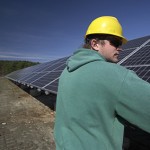
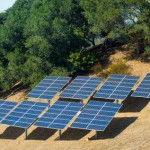
According to at least one study, Ontario’s feed-in tariff (FIT) and microFIT programs continue to create thousands of green jobs, and within a few years, could generate more than 3 GW of environmentally-friendly electricity. Think of the power these and similar programs could have if they were implemented country-wide.
The FIT program pays owners of green energy projects above-market rates to feed electricity into the grid from renewable sources such as solar and wind. The microFIT brings these benefits to the levels of communities and individuals and pays some of the highest prices of either program to projects of 10 kW and less. These high prices have opened up a range of opportunities for workers with photovoltaic (PV) certification and other renewable energy training.
Ontario’s Energy Minister, Brad Duguid, is confident that the programs will create 50,000 new jobs, and a recent report by ClearSky Advisors suggests that if the FIT and microFIT continue on their current paths, they could contribute to the equivalent of more than 70,000 added person-hours of employment by 2015.
More Money Could Mean More Jobs for Workers with PV Training Certification
According to one analysis, Alberta’s tar sands will receive about $31 billion in tax and royalty write-offs this year - funding that will essentially come out of the public purse. A 2008 study by the International Institute for Sustainable Development (IISD) suggested that an equivalent amount of public money would bring more jobs and revenue for the government and fewer greenhouse gas emissions if it were spent on green energy projects.
In response to the recent economic recession, the federal government poured $47 billion of stimulus money into the flagging Canadian economy for construction and infrastructure upgrades. While few statistics are currently available regarding how many jobs the spending created, according to Prime Minister Stephen Harper, Canada has seen 420,000 new jobs since mid-2009. It stands to reason that many of these jobs are due to the stimulus program.
Green Jobs: a New Way to Look at Stimulus Spending
According to one outlook, if $30 billion were given to the solar industry, it could create 6.7 GW of green energy and around 180,000 jobs for trained and certified PV workers, not to mention the spin-off benefits to peripheral industries.
To me, this swirl of figures paints a picture. A basic analysis of the numbers suggests that if the $30 billion the oil sands received in one year was used instead for renewable energy projects, it could create more than a third of the number of jobs the $47 billion stimulus package added, at the most optimistic, in only a couple of years. It would therefore be reasonable to assume that even from a purely economic perspective, green energy is a wise investment, particularly in uncertain times.