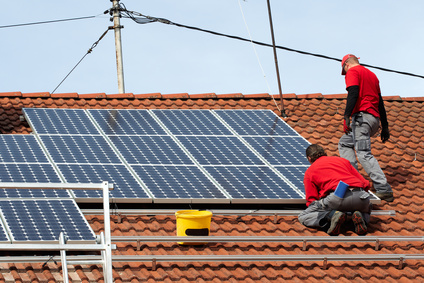
 Everyone is hoping for a fast track to a new green economy, but lack of basic training could slow the momentum. Community leaders in the US express “serious concern” about the failure of cities like New York to supply basic education and skills training for jobs in the new green economy. Jobs such as weatherization, solar panel installation, and wind technology require a level of expertise that too many communities are content to ignore.
Ontario’s green economy is booming with the feed-in tariff (FIT) and micro feed-in tariff (microFIT) programs that buy back energy from Ontario renewable energy producers. Many of the larger solar projects have the technical expertise in place to complete their installations properly, but the microFIT program for homeowners, farmers, and small businesses may be subject to opportunistic solar installation companies who short-change technical qualifications for quick profit.
By December 1, 2009, the Ontario Power Authority (OPA) had received 1,193 microFIT applications, 1,166 of which were for solar photovoltaic (PV) installations. Some of these applicants may be tempted to pursue a “do-it-yourself” solar installation on their property. This may not be the wisest choice.
microFIT Solar Installations Require Technical Expertise
Even for small microFIT operations that generate 10 kilowatts or less, the technical considerations can be daunting. Eaton outlines some of these on its Web site. Installers must also keep up with changing rules and regulations. For instance, the OPA recently changed its microFIT installation rules for connecting solar projects to the distribution system using in-series, parallel, or direct configurations. Training facilities such as Ontario Solar Academy offer courses that focus on issues related to Ontario’s microFIT and FIT programs and the Canadian Electrical Code.
A qualified installer can also make sure that solar equipment adheres to Ontario’s domestic content requirements. The microFIT program stipulates that 40% of all solar photovoltaic project materials must be Ontario manufactured or produced.
These requirements will go up to 60% in 2011.
Do-it-yourselfers should also consider the legal implications of their contract with the OPA when the guidelines state that “hiring qualified installers” is one of the listed responsibilities under the microFIT program overview. The OPA Web site contains a list of questions for microFIT participants to ask their installer such as, “Are your installers qualified to install the project?” and “Do they meet all necessary safety regulations, licensing, and certification requirements?”
With these cautions, most microFIT participants will opt to follow the OPA’s suggestion to “choose a qualified installer” for their renewable energy project. The only question is whether there will be enough qualified solar installers available to keep Ontario’s green economy on track and running full steam ahead.