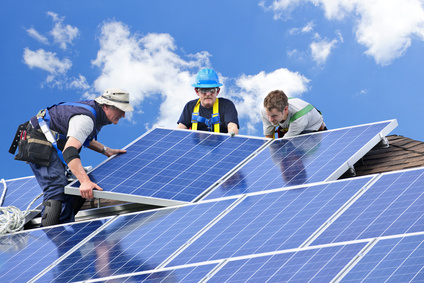
IKEA Canada is financing the installation of 3,790 solar panels at three of its stores in the Greater Toronto Area. Company executives have agreed to install 12,80 panels at its store in Etobicok, 1,250 in North York, and 1,260 in Vaughan. Totaling $4.6 million, this renewable energy investment will be the largest rooftop solar installation affiliated with Ontario’s Feed-in Tariff program. Brad Duguid, Ontario’s Energy Minister, is understandably in favour of the solar projects and what they mean for the future of the province. “IKEA Canada is another example of how our Green Energy Act is engaging businesses and building a cleaner electricity system for future generations,” Duguid said in a recent statement.
Solar Projects to Generate Energy and Revenue
IKEA Canada expects that its solar panels will generate about 690,000 kilowatt-hours of clean energy per year - enough to meet the electricity needs of approximately 100 homes. The company will receive 71.3 cents per kilowatt-hour for the energy that these panels feed back into Ontario’s utility grid. This means that IKEA could earn as much as $684,000 a year in extra revenue through this renewable energy investment. Construction is already underway, and execs hope that the solar installations will be fully operational by the end of this year.
Solar Installation Reflects IKEA’s Environmental Commitment
IKEA spokesperson, Madeline Läwenborg-Frick, says that the company’s investment is part of its commitment to create 150 solar projects internationally over the next three years. The choice to include Ontario in this list stems from the increasingly unmanageable energy needs of the community. “Ontario has one of the lowest percentages of renewable energy in Canada… we’re putting quite a bit of renewable energy into the Ontario grid which desperately needs that boost.” She adds that the solar projects are “in line with our social and environmental practices to be a responsible retailer.” The company is also exploring opportunities to use other renewable resources, such as rainwater and geothermal energy, for more of its Canadian locations.